
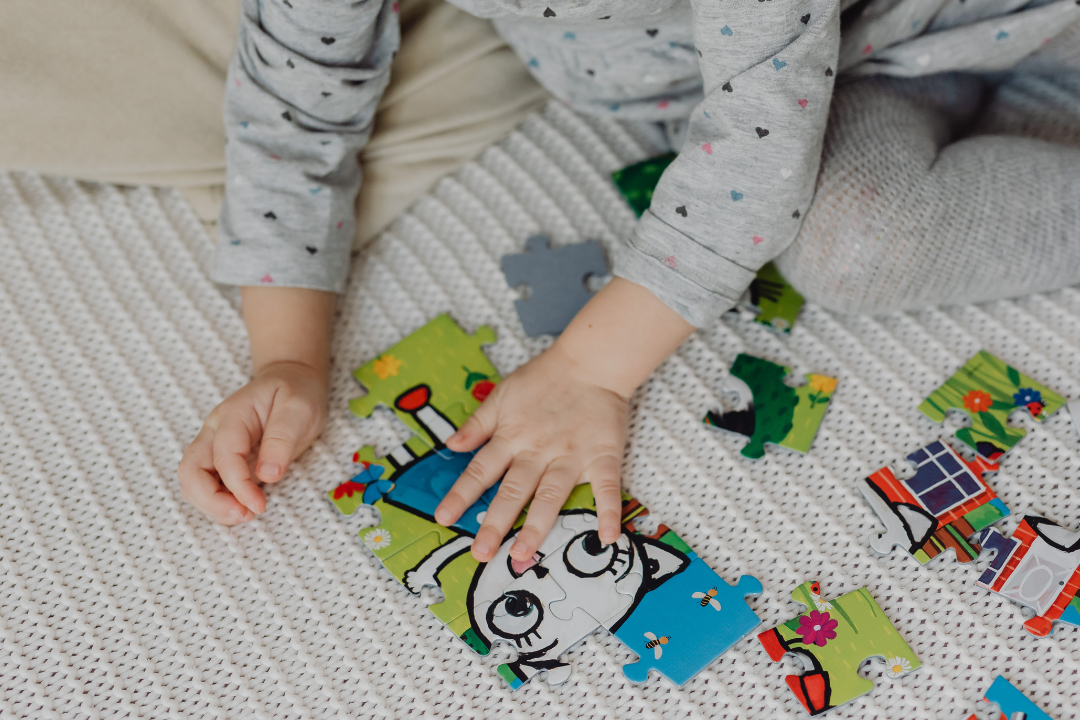
As parents, we all want to give our children the tools they need to succeed—and it turns out, those tools might just be shaped like puzzle pieces! From the simplest wooden puzzles to intricate brainteasers, puzzles are much more than a fun activity. They are powerful tools for building essential problem-solving skills and supporting your child’s overall development. Let’s dive into the science of how puzzles make learning playful and meaningful.
1. Boosting Brainpower: Cognitive Benefits
When your child fits the right piece into a puzzle, they’re doing more than just playing. They’re engaging in critical thinking, spatial reasoning, and logic-building exercises. These activities challenge the brain to recognize patterns, analyze options, and make connections.
Did You Know?
Solving puzzles can also improve memory. When children remember where certain pieces fit, they strengthen their short-term memory while building their ability to plan and organize.
2. Fine-Tuning Motor Skills
Manipulating puzzle pieces helps young children develop fine motor skills and hand-eye coordination. Picking up pieces, rotating them, and placing them in the right spots exercises small muscles in the hands and fingers, which are crucial for writing and other tasks later in life.
3. Learning Patience and Persistence
Puzzles teach an important life lesson: sometimes, things don’t come together immediately. Children learn to stay patient, try different approaches, and persist through challenges. This ability to embrace trial and error is a cornerstone of problem-solving and build a strong mindset.
4. Building Social Skills Through Play
While puzzles can be a solo activity, they’re also fantastic for group play. Working on a puzzle together encourages teamwork, communication, and the ability to share and collaborate.
In cooperative play, children learn to negotiate roles, discuss strategies, and celebrate each other’s successes. This kind of interaction nurtures empathy and a sense of community, skills that are critical in all areas of life.
5. Setting the Foundation for Math and Literacy
Puzzles are a hidden gem for early math and literacy skills. Matching shapes and patterns builds spatial awareness and problem-solving abilities, which are fundamental to math. Similarly, puzzles with letters or words introduce early reading skills by helping children recognize symbols and patterns.
Tips for Choosing the Right Puzzles
To maximize the benefits of puzzles, it’s important to choose the right ones for your child’s age and development:
- Toddlers: Start with chunky wooden puzzles with simple shapes and knobs.
- Preschoolers: Look for puzzles with themes like animals or vehicles and 10-20 pieces.
- Older Children: Challenge them with jigsaw puzzles or 3D puzzles that require deeper concentration.
Conclusion: Playful Learning for Life
Puzzles may seem simple, but their impact is profound. They teach your child to think critically, persist through challenges, and collaborate with others—all while having fun. The best part? Puzzles grow with your child, adapting to their abilities and interests at every stage of development.
At Amaly Kidsclub, we celebrate playful learning in all forms, from puzzles to imaginative play. Next time your child works on a puzzle, know that they’re not just playing—they’re building skills that will serve them for a lifetime.
Tell Us!
Does your child love puzzles? Share their favorite kind in the comments below, or visit Amaly Kidsclub to explore our Puzzle Center and discover how playful learning comes to life!